In 1905, Gennaro Lombardi opened the first licensed pizzeria in the United States on Spring Street in Manhattan’s Little Italy. Lacking the Mediterranean wood ovens of Naples, Lombardi fired his massive brick chambers with anthracite coal—a dense, smokeless, extremely hot fossil fuel native to Pennsylvania.
The Anthracite Advantage
Anthracite coal burns intensely dry at over 500°C (930°F), producing zero aromatic smoke. This unique heat profile vaporizes moisture instantaneously from the underside of the dough, producing the celebrated dry char (termed "coal char," never burnt ash) that became the cornerstone of pizzerias like Patsy's (East Harlem, 1933) and Totonno's (Coney Island, 1924).
The Anatomy of the New York Street Slice
By the mid-20th century, the invention of specialized gas-fired deck ovens allowed pizzerias to expand onto every corner of the five boroughs. The modern NY slice developed specific characteristics:
- Catskill Aqueduct Water: New York City tap water possesses a low mineral hardness (circa 1.0 to 1.5 grains per gallon) and balanced pH, which prevents dough gluten from over-tightening, enabling massive 18-to-20-inch discs to be stretched without snapping.
- High-Gluten Flour: Spring wheat flour with 13% to 14.5% protein content, enriched with malted barley flour to promote deep caramelized browning during a 6-to-8 minute bake at 290°C.
- Low-Moisture Whole Milk Mozzarella: Unlike high-water Neapolitan fior di latte, aged whole milk mozzarella melts evenly without turning the cardboard slice box into soup.
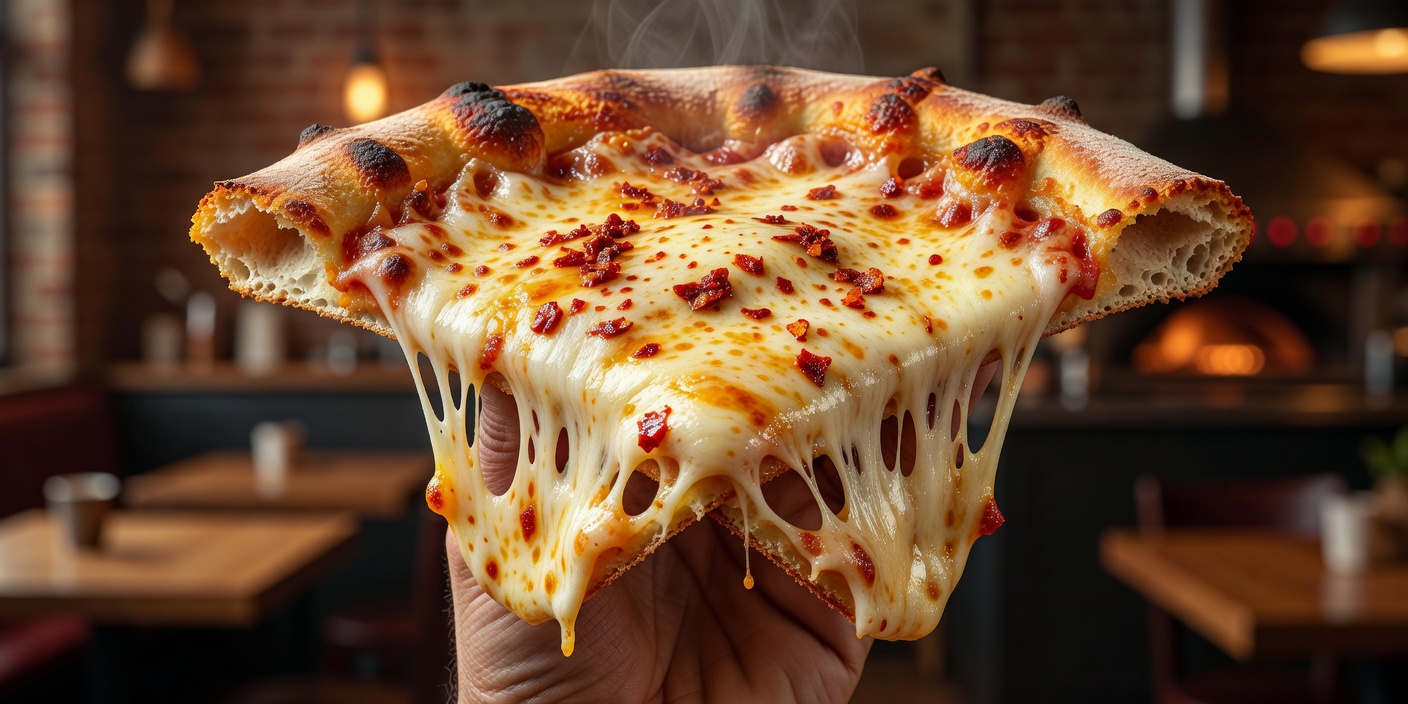
- The Fold Ritual: A proper slice must maintain sufficient structural integrity along the bottom crust so that folding it lengthwise creates a rigid triangular trough capable of carrying sauce and oil directly into the mouth.
Pinnacles of New York Pizza
Lucali (Carroll Gardens, Brooklyn): Mark Iacono's candle-lit temple, rolling thin crusts with empty glass wine bottles and baking with a hybrid wood/coal bed topped with shaved Grana Padano and fresh basil sprigs.
Joe's Pizza (Carmine Street, Greenwich Village): The undisputed baseline of classic Manhattan street slices. Constant high turnover ensures pies spend no more than eight minutes out of the oven.
L'Industrie Pizzeria (Williamsburg): Massimo Laveglia's modern revolution, integrating Italian long cold-fermentation (72 hours) with classic New York pie dimensions, topped with Burrata and hot honey.